


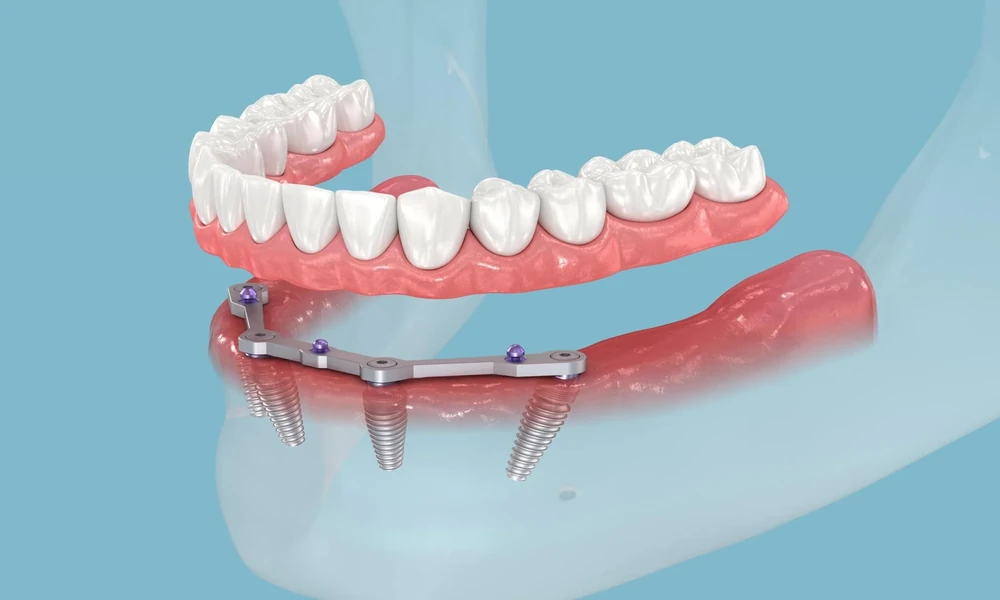
For individuals who have lost the majority of their teeth or other teeth, All-on-4 dental implants are a comprehensive full-arch implant solution. It is a treatment with 4 strategically placed implants that support a complete fixed arch of replacement teeth. Patients can learn more about the procedure, benefits, eligibility, and costs to see if it’s right for them and what to expect after treatment.
Before deciding whether this treatment is suitable, patients should understand how all on 4 dental implants differ from conventional dentures and individual tooth implants. Rather than replacing every missing tooth with a separate implant, this approach uses strategically positioned implants to support a complete fixed arch of replacement teeth. A dental evaluation can help determine whether a patient’s bone structure, gum health, bite, and overall oral condition make this type of restoration appropriate.
What Are All-on-4 Dental Implants?
The All-on-4 concept provides for a full upper or lower dental arch with four implants. It is common for two implants in the front of the jaw to be placed and two in the back of the jaw to be placed at an angle. This strategic placement can help to use existing bone optimally in proper patients. It is not a treatment in which every tooth is replaced by an individual implant. Rather, several implants are used to hold up one entire prosthetic arch.
Who can be a Candidate?
All-on-4 can be used for adults who have a lot of lost teeth, which are severely damaged, or who struggle to wear dentures. The candidate must get a comprehensive dental exam to see if they have strong bone, gums, bite and oral health for treatment. Tooth extraction, gum surgery, and/or surgical procedures to the bone may be necessary before dental implant placement in some patients. Treatment suitability and healing also may be affected by smoking or some health conditions.
What are the steps in the procedure?
The first step in treatment is an exam and consultation. X-rays and 3D scans could be performed to assess the bone structure and determine the positioning of the implants. Preparatory steps are done prior to or while implant surgery is performed. Each of these implants is affixed, during surgery, in strategic positions. Sometimes temporary replacement teeth can be provided immediately following the implant placement, depending on the circumstances and the stability of the teeth. The implants are then allowed to heal and bond with the jawbone. When the healing is good enough, a permanent custom-made prosthesis is attached.
Benefits of All-on-4
There is one great benefit: stability. The replacement teeth are attached to the implants and tend to move less than traditional dentures. Patients can enjoy better chewing, speaking, comfort and confidence. Treatment can also yield a natural-looking smile. In certain cases, this may allow a strategic placement of implants to minimise the amount of bone graft required, but in some instances it may not be avoided.
Understanding the Cost
The cost of the All-on-4 treatment isn’t all the same. Dental providers, implant system, type of prosthetics, geographical location, diagnostic procedures and treatment complexity can all influence the price of the implant. Other costs can include the extractions, a bone graft, temporary teeth, permanent teeth, and follow-up costs. Patients should get a comprehensive written estimate before starting treatment.
Aftercare and Maintenance
To ensure implant performance, adequate care and maintenance are crucial. Patients are advised to adhere to their dentist’s cleaning protocols and to avoid poor hygiene habits and lack of regular dental appointments. If so, special cleaning tools might be advised for under the prosthesis.
Conclusion
For those who are good candidates with significant tooth loss, all-on-4 dental implants can offer an excellent solution that is both stable and fixed. Treatment is a combination of strategically placed implants plus full arch prostheses for function and appearance. However, each case is unique.
