


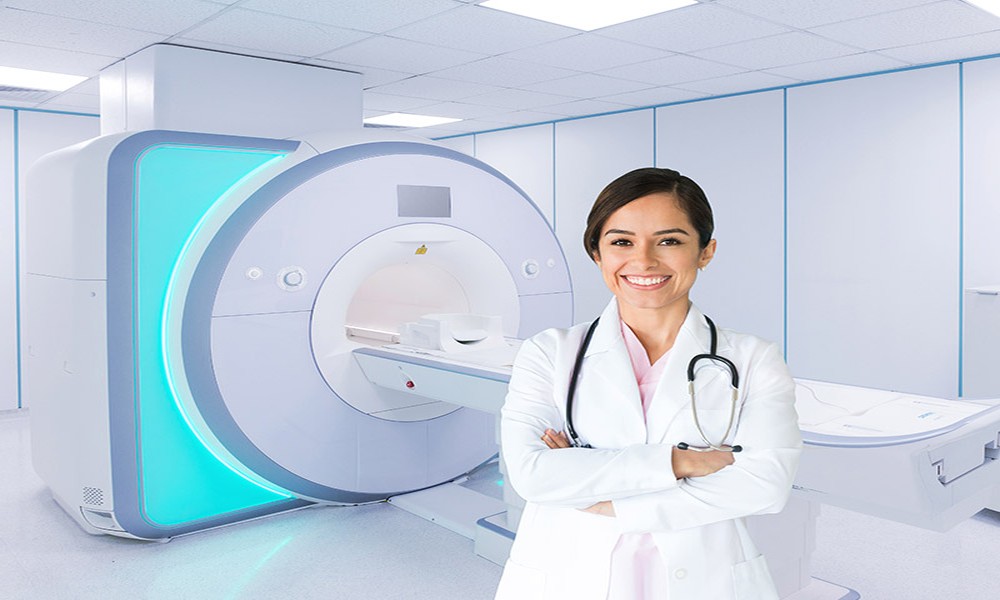
A CT scan is a highly effective imaging technique to identify injuries and evaluate a wide range of medical conditions. It is particularly useful for identifying abnormalities such as lesions, tumours, internal bleeding, especially within the abdomen. It is a non-invasive technique that uses a narrow beam of X-rays to generate detailed, cross-sectional images of the body’s internal structures. Unlike conventional X-rays, CT Scans provide a clearer understanding of internal organs, bones and blood vessels.
Working Methodology
Unlike a standard X-ray, a CT scanner uses a motorized X-ray beam that rotates in a circular motion within a gantry. As the patient lies on a moveable table, the scanner passes X-ray beams from multiple angles. Specialised digital detectors capture these images, which are then processed by a computer to generate cross-sectional views. These images allow clinicians to look from multiple perspectives before a surgery and plan treatment option. It is a non-invasive scan that can be done on any part of the body.
Opt for a diagnostic centre that provides a CT scan price that is both affordable and value-driven.
What is a CT contrast agent?
Contrast agents are substances that are used to improve the visualisation of specific organs, tissues or blood vessels during a CT scan. These agents are typically eliminated from the body shortly after the scan.
The most commonly used contrast agents are iodine-based may be adminsitered intravenously or orally. They help highlight blood vessels, tumors, and organs.
In addition, barium sulfate suspension is used for gastrointestinal (GI) tract imaging, making structures such as intestines, stomach and esophagus, more visible.
Preparations
Upon the arrival to a diagnostic facility, you may be asked to wear a loose-fitting gown and remove metallic objects such as dentures, jewelry, eyeglasses and hairpins, as these can interfere with image quality.
In certain cases, fasting for a few hours may be required. It is important to inform the radiologist about any medications you are currently taking or have any allergies. Patients with conditions such as asthma, diabetes, kidney disease, thyroid disorders or heart conditions should notify the healthcare provider beforehand. Women must inform the radiologist if they are pregnant or suspect pregnancy before the scan.
What happens during a CT scan?
A CT scan is usually done in a diagnostic facility, only by an experienced radiologist or a qualified technician. Before taking this test, the patient is advised to abstain from drinking or eating for several hours before the procedure.
A patient undergoing this scan needs to lie on a table that slides into the centre of the donut-shaped machine. Once the patient is inside the gantry, the machine’s X-ray beam rotates around the patient and generates a series of cross-sectional images. Typically the scan takes approximately 15 minutes to complete. However, if an oral contrast is used, it could take up to 1 hour and 15 minutes. Given that there is radiation exposure during the scan, pregnant patients must inform the radiologist before the scan. In addition, if you are receiving CT scan IV contrast, do not eat or drink 4 hours prior to your exam. You may continue to drink water if you prefer.
When is this scan suggested?
A CT scan is helpful in identifying a disease or injury within the various regions of the body. It is often used as a screening tool to evaluate possible tumours or lesions within the abdomen. For instance, a CT scan of the brain is suggested to find out injuries, hemorrhage, tumours, clots leading to stroke, and other conditions.
CT scan vs. MRI
A CT scan and an MRI are both imaging machines used to help doctors see inside the body. For both of these tests, you’ll lie on a moving table that passes through a doughnut-shaped machine.
A CT scan uses X-rays to image the body. An MRI uses radio waves and a powerful magnet to create similar images. CT scans are helpful in showing where things are – where one organ ends and another begins, for instance. An MRI is geared toward showing normal and abnormal tissue.
CT scans are often used to find cancer, bone fractures, internal bleeding, blood clots, and injuries to the spine and brain. An MRI shows certain diseases that a CT scan can’t. For instance, uterine, prostate, and certain liver cancers are hard to see on a CT scan. Also, an MRI is used to diagnose injuries to the soft tissues or joints and injuries to organs like the heart, brain, and digestive organs.
Search for an affordable and reliable CT scan centre with keywords CT scan centre near me for accurate and timely diagnosis.
Disclaimer: For personalised advice and further information, always consult your doctor or qualified healthcare professional.
